Family care · Guide
Sharing the cost of caring for an aging parent: a sibling conversation guide
How to talk about money, time and fairness without turning it into a fight.
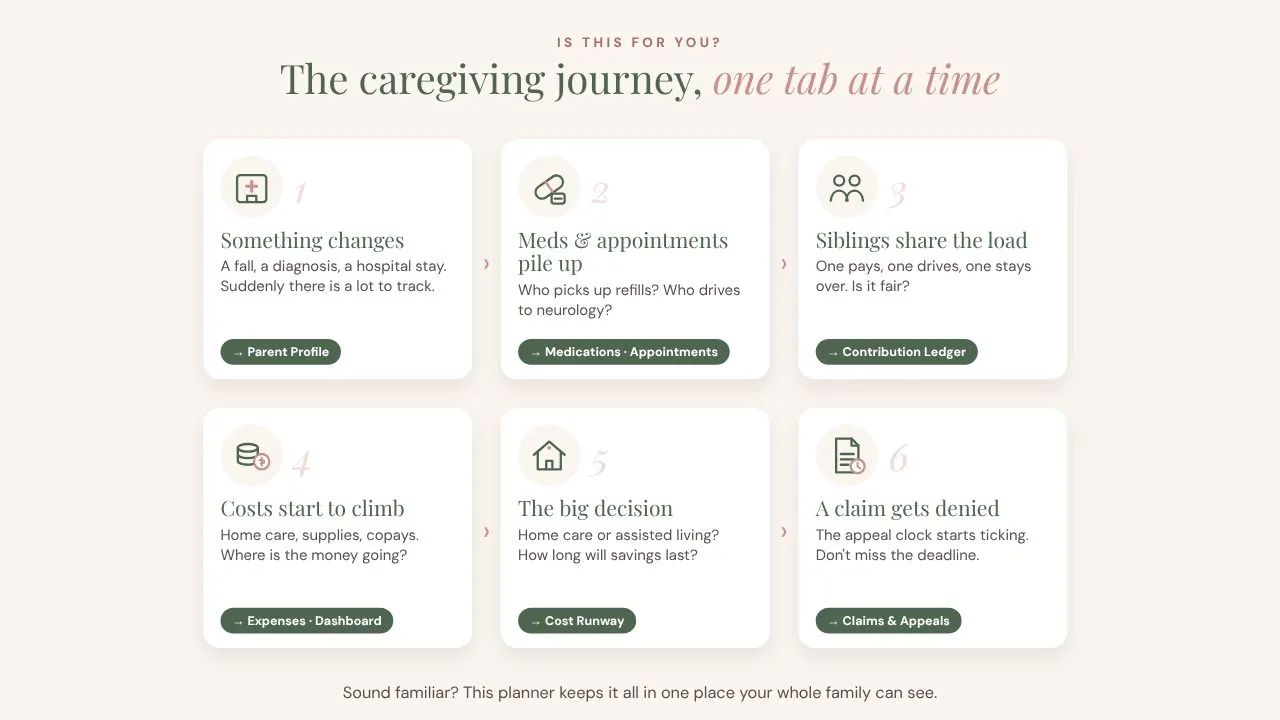
When a parent needs more help, siblings rarely contribute the same way. One lives nearby and drives to appointments. Another sends money. Someone else coordinates everything by phone. Resentment usually grows from what nobody wrote down. This guide is about making the load visible , it is not financial or legal advice.
1. Write down what is already happening
Before any meeting, list the current costs (care, medications, home help, travel) and the current time spent (visits, appointments, paperwork, calls). Use estimates; you can refine later.
2. Count time, not only money
Caregiving hours are real contributions. Some families give hours a value , for example, a local hourly rate for home help , so time and money can be seen side by side. Agree on the rate together rather than imposing one.
3. Look at the options with numbers
For each realistic option (staying home with help, assisted living, moving in with a sibling), estimate the monthly cost and how many months your parent's savings and income would cover it. Seeing a "runway" makes the conversation less emotional and more concrete.
4. Hold a short family meeting
- Share the same one-page summary with everyone beforehand.
- Agree on decisions needed now versus later.
- Assign named owners: who handles bills, appointments, insurance calls.
- Set a date to review , circumstances change.
5. Keep a running ledger
A simple shared record of who paid or did what each month prevents the "I do everything" argument months later. Review it together, not as a scorecard but as a check that the plan still feels fair.
For legal or financial decisions (power of attorney, benefits, tax), talk to a qualified professional in your state or country.
This article is general information to help you organize your own notes. It is not legal, financial, tax or insurance advice. Talk to a qualified professional about your family's situation.